Double-Dipping in the Dutch Caribbean
By Hideaways Editor Pat Chaudoin
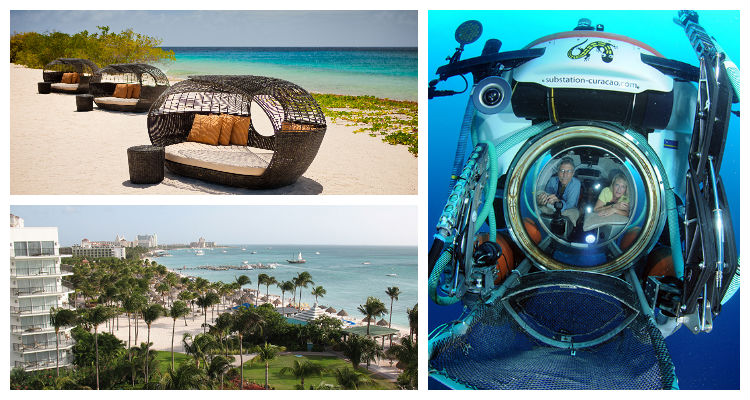
Maybe you know that the ABC Islands of the Netherlands Antilles--a
self-governed entity within the Kingdom of the Netherlands--are so named for
the alphabetical order of the three main islands: Aruba, Bonaire, and
Curaçao (pronounced "CURE-a-sow"). But did you know that each island has
its own distinct personality, cultural feel, and topography? As I discovered on
a recent visit, Aruba is a beach-bum's paradise, Bonaire is a world-renowned
dive destination, and Curaçao is colorful, quirky, and culturally rich.
And though Dutch is the official language of all three, most locals also speak
Spanish, English, and a local dialect called Papiamento, a combination of
Dutch, Spanish, Portuguese, and Afrikaans.
Most important for visitors, this island group lies outside the hurricane belt,
just 35 miles off the coast of Venezuela. The weather is nearly perfect
straight through fall, with low humidity, cooling trade winds, and days of
almost guaranteed sunshine--at least during the dry season, which runs April
through October. But "dry season" is something of a misnomer, since it implies
a corresponding "wet season"--and these islands are anything but wet, being
arid and desert-like, with an average rainfall of only 20 inches a year. If
you're looking for a lush tropical getaway like St. Lucia or Jamaica, this
isn't it. Happily, the tradeoff is great sailing, diving, water sports, and
sun-tanning weather pretty much every day.
Since I'm not a diver, I passed on visiting Bonaire and opted instead for a
perfect "double Dutch" of culture on Curaçao and idyllic beach days on
Aruba. If you have the time, you really should work both islands into your
travel plans for a nicely rounded vacation--something easily done with a quick
20-minute flight aboard regional carrier InselAir.
Beach-a-Go-Go
Aruba is by far the better known of the two islands, and Americans make up the
majority of its visitors, followed by Brazilians and Venezuelans. During a
frigid winter, who could resist escaping to that nearly 10-mile stretch of
beachfront on Aruba's northwest coast? It's one long, grand sweep of white sand
bordered by warm, neon-turquoise water--a bustling playground for kids and
adults.
As you wind your way from the airport through Aruba's capital of Oranjestad to
the hotel district, you first hit Eagle Beach. This is the quieter, more
laid-back area where the majority of low-rise hotels, condos, and time-shares
are gathered. Then you enter the high-rise section of hotels on busy Palm
Beach, where almost every chain imaginable is lined up in a row: Hyatt,
Radisson, Riu, Holiday Inn, and the Aruba Marriott Resort & Stellaris
Casino, where I was staying. Thankfully, the Aruba Marriott is at
the far northern end of the high-rise district, with only the beautiful,
brand-new Ritz-Carlton to its northern side. So as Aruba
beachfront goes, this is one of the quieter stretches. That said, there are
water-sports concessions everywhere--the beach is public, and vendors can set
up shop wherever they like.
Inside, the 388-room Aruba Marriott was a bustling place as well, with folks
heading in and out of the casino or gathering in the lobby bar to watch a World
Cup game. I was staying on the Tradewinds Club level, the exclusive
hotel-within-a-hotel on the resort's top (8th) floor. As soon as
reception saw my reservation, a bellhop was called over for my bags and I was
escorted to the Club's 8th-floor private lounge/check-in desk. This
lounge also is where Tradewinds guests enjoy complimentary meals and snacks
throughout the day, including a full American breakfast of eggs, meats,
pastries, and fresh fruit; sandwiches, salads, and an assortment of desserts
for lunch; afternoon tea; and a spread of hors d'oeuvres and an open bar each
evening. Given what I overheard about the cost of breakfast alone on Aruba, the
value of staying on the Tradewinds level seems obvious.
Equally important to me, Tradewinds guests have a reserved beach area toward
the less-congested northern end of the property. Here, exuberant Hermina, beach
attendant extraordinaire, guides you to your thatched palapa with lounge chairs
and perfectly tucks in your towels so the wind doesn't blow them away. She even
creates a towel-pillow for your head! This excellent level of service was
everywhere, including at the resort's "pop-up" seafood restaurant, Simply Fish.
This unique toes-in-the-sand dining experience takes torches and linen-clad
tables right to water's edge each evening, just in time for sunset. The food
was fresh and delicious, and the sunset view with sailboats bobbing in the
water wasn't too shabby, either.
The best part of my Tradewinds Club room was the view from my huge balcony that
overlooked the freeform family pool--there's also a quiet adults-only pool--and
an amazing panorama of the beach and hotel strip. The beds were comfy and the
bathroom was fresh and updated, but I have to say, the room furnishings seemed
dated and the rugs were downright worn. I also could hear occasional noise
through the door connecting to the adjoining room--my advice: book a
non-connecting room.
The timing of my trip to Aruba was serendipitous, during opening week of the
2014 FIFA World Cup. Excitement for the event was at fever pitch, and Dutch
fans wore an ocean of orange at beachside bars during The Netherlands' games. A
few bars and restaurants along hotel row even set up giant screens on the beach
and televised the most popular U.S. and Dutch matches at night, drawing crowds
of exuberant fans--no doubt fueled by alcohol--that you could hear exploding
into cheers up and down the beach each time their favorite team scored.
As magnetic as the beach at the Aruba Marriott is, you should try to get off
that lounge chair and see some of the island. My quick stay was punctuated by a
couple of fun half-day excursions: a well-run four-hour snorkel/catamaran sail
operated by Red Sail Sports ( http://www.aruba-redsail.com)
that included lunch and an open bar (a steal at $72/adult), and a
wild-and-crazy off-road safari ride to a natural pool with De Palm Tours (http://www.depalmtours.com),
whose drivers gave us a great overview of the island while imparting some
fascinating history ($99/adult).
Not in Kansas Anymore
You truly switch gears when you arrive on Curaçao. The first thing I
noticed as I made my way through the airport was the extensive Dutch being
spoken. European visitors far outnumber Americans here, and the whole island
has a relaxed, laid-back vibe.
I connected with my driver, Marlin (yes, like the fish), and off we went to
lovely Santa Barbara Beach & Golf Resort on the island's
southeast coast. The 45-minute drive took us over towering Queen Juliana
Bridge, which crosses St. Anna Bay in Willemstad, Curaçao's capital. The
bridge connects the historic quarter of Punda, founded by the Dutch in 1634,
with the equally historic district of Otrobanda, established in 1707. Driving
over the 185-foot bridge gave me an amazing perspective on the city.

Anyone who is at all familiar with Curaçao has no doubt seen photos of the
quaint, brightly colored buildings that line the waterfront of Willemstad
Harbour. As the story goes, one of the first Dutch governors on the island was
taking a carriage ride through the city and complained of a migraine from the
intense sunlight reflecting off the city's dazzling white buildings. He ordered
that all buildings be painted in varying pastel shades--which has continued to
this day. Some versions of the story say it was later discovered the governor
held the majority share in the local paint business. Whatever the case,
Willemstad's colorful waterfront and wonderfully preserved historic buildings
have earned it the distinction of becoming a UNESCO World Heritage site.
As we worked our way to the resort, Marlin gave me a quick lesson in
Papiamento. From my college Spanish, I quickly picked up "bon dia"
(hello) and "bon tardi" (good afternoon). "Danki" (thank you)
wasn't too hard to figure out, either. Then there's "dushi," the local
term of endearment that means "nice" or even "sweetie," and is found on
everything from T-shirts to bottled water.
My language lesson was cut short by our arrival at the entrance gates to Santa
Barbara Plantation, a glorious expanse of 1,500 rolling oceanfront acres that
encompasses private residences, a 120-slip marina, a Pete Dye-designed golf
course that snakes along waterfront cliffs, and the 350-room Santa Barbara
Beach & Golf Resort. Though not a hideaway in size, the resort certainly
qualifies in terms of being tucked away in its own serene, secluded setting,
with nothing around for miles. If you were of a mind to, you could easily
hunker down here for days, being waited on hand and foot, playing the Old
Quarry Golf Course, lounging by the various pools or on the white-sand beach,
snorkeling and diving, and dining at the resort's four restaurants.
My immediate impression of the elegant open-air lobby was, "What a view!" A
strip of shallow turquoise sea gathered to a deep cobalt blue just offshore,
and huge ships cruised along at the horizon line, many of them tankers from
Venezuela heading for Curaçao's busy oil refinery. I was handed a
refreshing glass of blue Curaçao liqueur on ice, checked in, and then
whisked off by golf cart to the resort's Sea Traditions rooms, a very private
enclave of upscale accommodations separated from the main part of the hotel by
a winding walkway.
Secreted away in several one-story buildings with just a handful of rooms each,
Sea Traditions is the perfect choice for honeymooners and other romantics. The
butler pointed out the highlights of my spacious room and explained how to
operate the plantation-shuttered sliding doors that opened onto my private
terrace. Right off my terrace was the deserted Sea Traditions pool, with its
cozy-looking cocoon loungers for two. And beyond the pool were the golf course
and that to-die-for turquoise sea.
It's "Dushi"
My days were spent relaxing by one of the two main pools, a chilled Amstel
Bright in hand, and swimming at the long stretch of beach adjacent to the
pools. There's also a full-service spa, a nicely equipped gym with ocean views,
and an on-site water-sports concession, Ocean Encounters, to set you up with
diving, snorkeling, and kayaking.
Dining at Santa Barbara was a real treat, whether it was sushi served in the
grand lobby each evening or delicious Mediterranean cuisine at Medi. One night,
I joined some new friends for fresh seafood at Shore American Grill, where we
shared delicious appetizers of jerk sea scallops and crab cakes with wasabi
mayonnaise. My meal of perfectly grilled mahi-mahi was made even more amazing
by watching the chefs flourishing their utensils in the open-air kitchen.
One thing to note: Unless you've rented a car and are prepared to drive fair
distances--or you don't mind a somewhat pricey cab ride into Willemstad--you're
something of a captive audience at Santa Barbara as far as dining and
entertainment go. The resort does offer an all-inclusive rate with
three meals daily, unlimited beverages (alcoholic and soda), and discounted
golf fees (starting at $233/night/person through December).
That's not to say there aren't things to do within 30 minutes of the resort. I
toured a nearby aloe vera plantation, where they grow the plants for their own
line of health and beauty products called CurAloe (http://www.aloecuracao.com).
I came away with aloe-infused soap, night cream, and body lotion--a unique and
useful souvenir of the island! Just down the road, I stopped in at
Serena's Art Factory (www.chichi-curacao.com)
for a look at the Dutch artist's colorful ceramic Chichis®, voluptuous
caricatures hand-painted by local women as part of a cottage industry designed
to provide income for stay-at-home moms.
One windy afternoon, I joined a small group for a sail aboard the luxurious
85-foot sailing yacht, Domicil ( http://www.saildomicil.com),
ably crewed by captain/owner Hans Robben and his first mate, Christine. We were
treated like royalty as we sailed the island's southern coastline, learning
tidbits of history from Hans and being served drinks and tasty hors d'oeuvres
by Christine.
But by far the high point of my visit to Curaçao was an excursion with
Substation Curaçao ( www.substation-curacao.com)
aboard their mini Curasub, which is used for scientific research and can
descend to a depth of 1,000 feet. Crammed in like sardines, four of us and our
pilot, Barbara, crept down the reef wall to 548 feet, where daylight fades and
the marine life becomes smaller and less colorful. Rising back up to a depth of
188 feet was like Dorothy opening the door to Oz, as Technicolor fish, coral,
and sponges magically "reappeared" along the reef.
At some point during your stay, preferably toward the beginning, I'd suggest
taking a private island tour. I spent all day with a wonderful woman named
Bigala, hitting the high points from Willemstad--with its designer shopping,
waterfront cafés, "floating" produce market, and unique pontoon pedestrian
bridge--all the way to the far end of the island at Westpunt, where we had
lunch at a popular locals hangout called Komedor Krioyo. Bigala also filled me
in on some of Curaçao's fascinating history and its lesser-known
secrets--like the "adult" resort and casino on the island's north shore, where
legalized prostitution is handled in a very Dutch fashion.
As for its history, Bigala pointed out the island saltpans where slaves worked
to harvest the salt that was essential for preserving fish and meat. These
days, the salt ponds are home to flocks of wild flamingos that are feasting on
brine shrimp--which, by the way, give the flamingos their pink color.
Bigala also regaled me with the story of Leonard B. Smith, a New Englander who
sailed to Curaçao in the late 1870s with a schooner full of ice from
frozen Maine rivers and convinced the locals to drink chilled beverages. He
started the island's first (and very successful) ice business, as well as its
first electric and water facilities. Smith also was responsible for building
Willemstad's floating pontoon bridge across St. Anna Bay. When he died of a
heart attack in 1898, at just 59 years old, Leonard B. Smith was one of
Curaçao's wealthiest residents.
As you're out and about investigating the island, you'll also discover that,
unlike Aruba, Curaçao has almost 40 smallish cove beaches tucked here and
there, mostly along the island's southern coast. According to Bigala, each has
its own personality, from quiet and tucked away to a hangout for locals or a
haven for tourists. Any of these beauties is the perfect place to spend an
afternoon swimming and snorkeling in the clear, protected waters.
Just like ordering a two-scoop ice cream cone because you can't settle on only
one flavor, I can't imagine traveling that distance and not sampling both Aruba
and Curaçao. Each offers a distinct experience that, when combined
with the other, creates a vacation combo that can't be beaten.